If you notice soft patches, thinning grass, or small sections that lift like a carpet, you may be dealing with grubs. These pests hide beneath the soil and feed on grass roots. As a result, many homeowners look for reliable grub control Michigan methods every year. The sooner you understand the signs, the easier it becomes to protect your lawn.
Why grubs are a major issue in Michigan
Michigan lawns use cool-season grasses, which grubs prefer. Also, our warm summers and mild fall temperatures create the perfect environment for beetle larvae to grow. Therefore, grub control Michigan plans focus on prevention in early summer and treatment in late summer when grubs are most active.
How to identify grub damage
Soft, spongy patches
When the soil feels soft under your feet, roots may be weakened. Since grubs feed below the surface, the top layer becomes unstable.
Grass that pulls up easily
If you can lift sections of turf without effort, it is a clear sign that grubs have eaten the roots.
Increased bird and animal activity
Skunks, raccoons, and birds dig for grubs. When they start tearing up small areas, it is time to check for grubs.
Irregular brown patches
Because roots are damaged, the grass loses moisture quickly. As a result, the lawn turns brown even with regular watering.
How to check for grubs
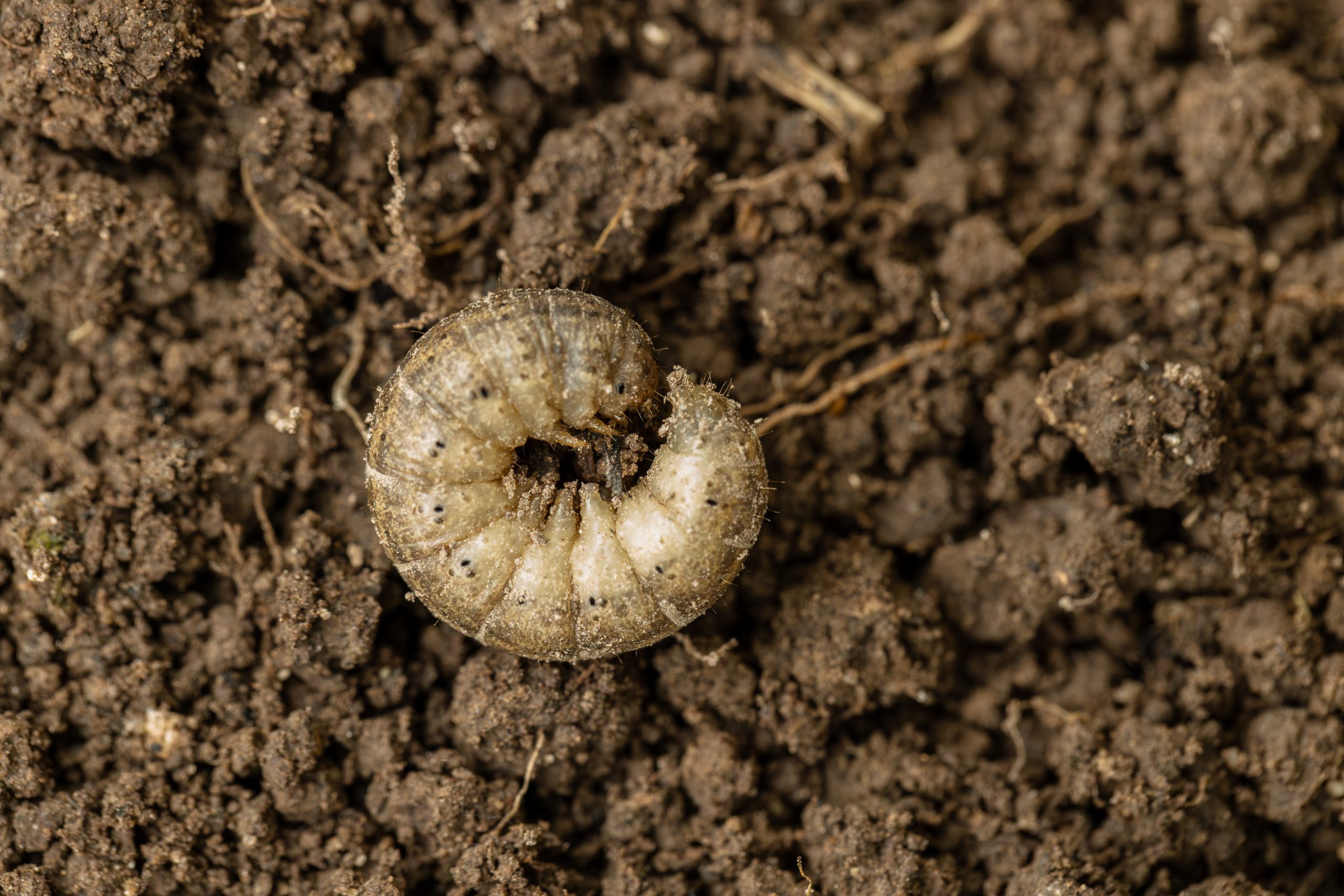
Cut a small square of turf about three inches deep. Then lift it gently and look for white, C-shaped larvae. If you find several in one area, you may need a strong grub control Michigan approach.
Best time for grub control in Michigan
Summer
Apply preventive products before eggs hatch. This stops young grubs from feeding later.
Late summer
During late summer and early fall, grubs are small and close to the surface. Therefore, this is the best time to treat active infestations.
Fall lawn care
After treatment, overseed thin areas and follow a fall fertilization plan so roots can rebuild.
Effective grub control methods
Preventive treatments
Use products designed for early summer application. These prevent larvae from developing.
Curative treatments
If grubs are already active, choose a curative product labeled for grubs. Always follow instructions and water the area afterward.
Cultural practices
Healthy lawns resist grub damage better. Mow at the right height, water correctly, and overseed yearly to maintain strong roots.
Natural and organic approaches
Some homeowners prefer natural options. Beneficial nematodes, for example, can reduce grub populations when applied at the correct soil temperature. Although they work more slowly, they are safe for people and pets.
When to call a professional
If the damage spreads quickly or if you see heavy soil lifting, professional help can make a big difference. Local lawn care experts understand Michigan timing and product selection. As a result, your lawn recovers faster with fewer repeated treatments.
To support your grub control Michigan plan, you can also read LawnTech’s guide on lawn maintenance in their Learning Center.
Michigan State University Extension offers detailed information about identifying and managing grubs across Michigan.