Key Takeaways
- Identifying whether you’re dealing with crabgrass or tall fescue is important because the two plants require different approaches.
- Crabgrass is a summer annual weed that grows low and spreads outward, becoming more noticeable during the warmer months.
- Tall fescue is a perennial grass that typically grows upright in distinct clumps and can survive from year to year.
- Growth habit, blade appearance, and the time of year can help you determine whether you’re looking at crabgrass or tall fescue.
- Crabgrass prevention can help stop seeds from germinating, while unwanted tall fescue may require a different approach.
- When you’re unsure what is growing in your lawn, proper identification should come before choosing a treatment.
If you’ve noticed a grass-like plant growing differently from the rest of your lawn, you may be wondering: Is it crabgrass or tall fescue?
At first glance, the two can look similar. But their growth habits, appearance, and seasonal behavior can help you tell them apart. Knowing what you’re looking at matters because crabgrass and tall fescue require very different approaches. Here’s how to identify the difference in your Michigan lawn.
Crabgrass: A Summer Annual Weed
Crabgrass is one of the most common lawn weeds Michigan homeowners encounter during the summer. Unlike desirable turf grass, crabgrass is a summer annual. It grows from seed each year and typically dies after cold weather arrives.
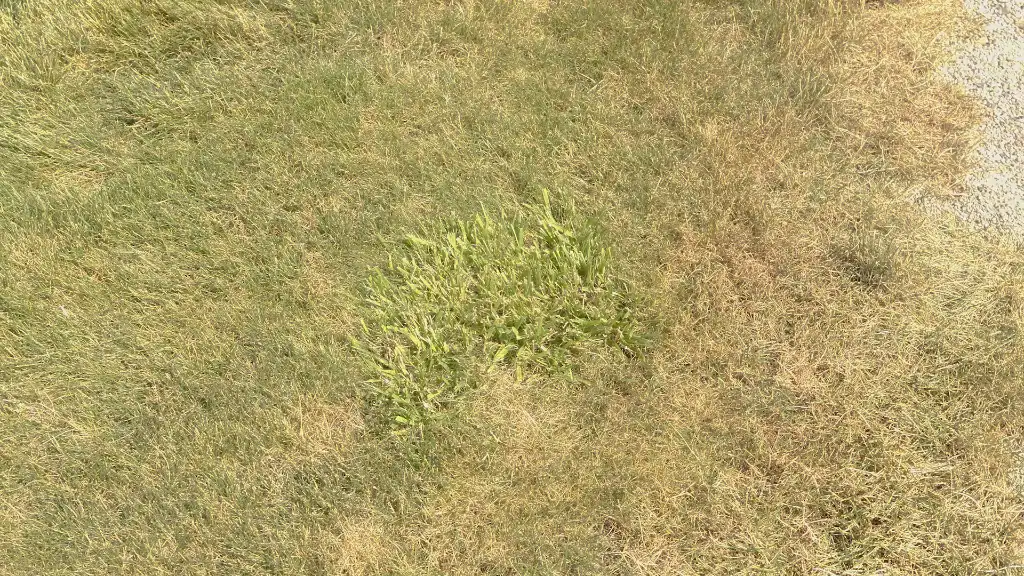
One of the easiest ways to identify crabgrass is by looking at how it grows.
Crabgrass typically:
- Grows low to the ground
- Spreads outward in a wide, crab-like pattern
- Has a coarse, somewhat lighter-green appearance
- Becomes more noticeable during the warmer months
- Dies after the first hard frosts in fall
Timing can also provide an important clue. Crabgrass generally becomes noticeable in June or July, after it has had time to germinate and establish. That’s one reason crabgrass prevention is an important part of a Michigan lawn-care program. Lawn Tech’s early-spring treatments include a crabgrass pre-emergent barrier designed to help prevent crabgrass seeds from germinating.
Tall Fescue: A Perennial Grass
Tall fescue is different from crabgrass because it is a perennial grass rather than a summer annual weed. It can survive from one year to the next and may remain present throughout the growing season.
Tall fescue typically:
- Grows in distinct clumps
- Has a more upright growth habit
- Has a noticeably wider blade
- Can resemble other cool-season grasses
- Remains alive from year to year
Tall fescue can be a desirable turfgrass when it’s part of an intentional lawn planting. However, when it appears as an unwanted grass-type plant in a different type of lawn, it can be difficult to control selectively. Because tall fescue is a grass, traditional broadleaf weed control isn’t designed to eliminate it.
Crabgrass or Tall Fescue? Look at the Growth Pattern
If you’re trying to determine whether you’re looking at crabgrass or tall fescue, start with the plant’s growth habit.
Crabgrass tends to grow low and spread outward across the soil.
Tall fescue tends to grow upright in a distinct clump.
The time of year can also help. A grass-like plant that suddenly becomes noticeable during the summer and spreads outward is more likely to be crabgrass. A plant growing in an upright clump that persists year after year may be tall fescue.
Crabgrass vs. Tall Fescue: Quick Comparison
| Characteristic | Crabgrass | Tall Fescue |
|---|---|---|
| Type | Summer annual weed | Perennial grass |
| Growth habit | Low and spreading | Upright and clumping |
| Blade | Coarse | Wider |
| Typical appearance | Lighter green and spreading | Darker green and upright |
| Seasonal behavior | Primarily noticeable in summer | Can persist year-round |
| Winter survival | Dies after hard frost | Survives year to year |
Keep in mind that grass identification isn’t always obvious. Growing conditions, mowing, moisture, and other factors can affect how a plant looks.
Why Correct Identification Matters
It’s important to identify the plant before deciding how to treat it.
Crabgrass is typically managed with prevention and appropriate weed-control strategies. Tall fescue is a desirable grass in some lawns but may be considered an unwanted grass when it appears in a different turf type. Using the wrong treatment can waste time and money—and some products that control weeds won’t work on unwanted grasses.
Identification should come before treatment.
Not Sure What’s Growing in Your Lawn?
If you’re still unsure whether you’re looking at crabgrass or tall fescue, take a clear picture of the plant and send it to us. Our team can help identify what you’re seeing and point you toward the appropriate solution.
Lawn Tech has been serving Michigan homeowners since 1971, providing lawn fertilization, weed control, disease control, and other lawn-care services throughout the Lansing and Grand Rapids areas.