Key Takeaways:
- Lawn Tech’s Seasonal Mole Control Program provides season-long protection from mole damage with expert trapping and responsive service.
- Underground traps are used exclusively, making the service safe for children, pets, and routine lawn maintenance.
- Mole activity changes throughout the year, with spring and fall typically being the most active and effective times for trapping.
- New mole activity can appear at any time because moles are roaming wildlife, which is why ongoing monitoring matters.
- Mole damage is not always caused by grubs. Moles primarily feed on earthworms and other underground insects.
- Service visits are based on active mole activity rather than a fixed schedule to ensure more effective control.
- Most homeowners see 6–10 moles removed per season as part of ongoing lawn protection.
- Professional trapping helps reduce lawn damage quickly and provides long-term management throughout the growing season.
Protect your lawn from unsightly mole tunnels all season long with Lawn Tech’s Seasonal Mole Control Program.
- Expert Mole Trapping
- Pet & Kid Safe Service
- Season-Long Mole Control
Control Period: March 16 – November 25 (weather permitting)
What’s Included:
- Initial inspection & active trapping to control existing mole activity
- Underground traps only — safe for kids and pets, nothing to mow around
- Season-long coverage with service performed as needed
- Active Response Guarantee:
If new mole activity appears, just call us
What To Know:
- Service visits are based on mole activity, not a fixed schedule
- Moles are roaming wildlife — new activity can happen at any time
- Mole damage does not always mean grubs (most of their diet is earthworms)
- Our goal is to manage and reduce lawn damage throughout the season
- Average homes see 6–10 moles removed per season
Understanding Mole Activity by Season
Moles are active year-round, but their behavior changes with the seasons. Knowing these patterns can help you time your trapping efforts more effectively.
Spring (Peak Activity)
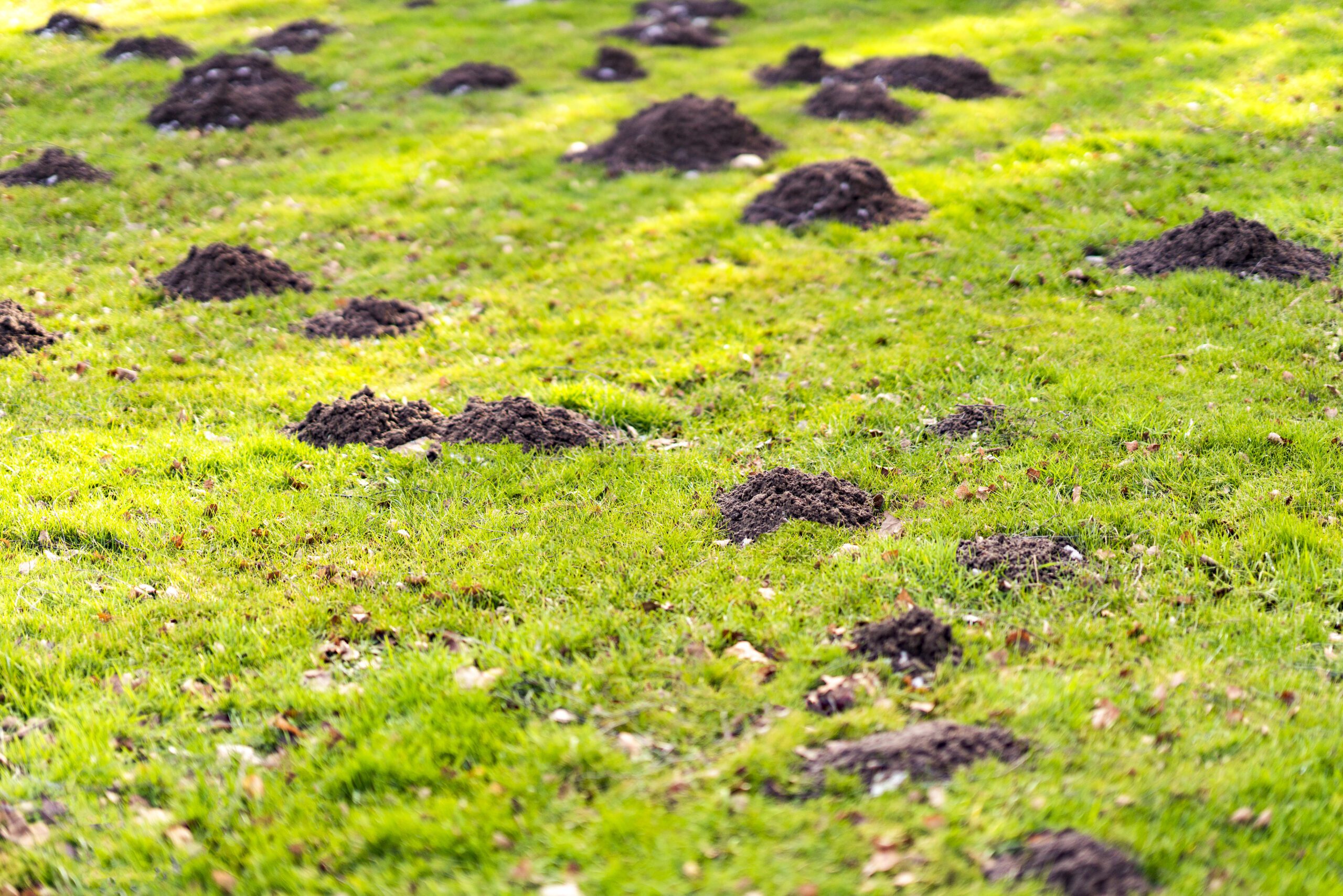
Spring is one of the best times to trap moles. As the ground thaws and becomes moist, earthworms and insects move closer to the surface—drawing moles upward. You’ll often see fresh tunnels and ridges during this time, making it easier to locate active runs.
Summer (Deep Tunneling)
In hot, dry conditions, moles tend to dig deeper in search of moisture and food. Surface activity may decrease, which can make trapping more difficult. However, after rainfall or irrigation, moles may return closer to the surface—these are prime opportunities to set traps.
Fall (Second Peak)
Fall rivals spring as an ideal trapping season. Moles increase their feeding activity to prepare for winter, often returning to shallow tunnels. Cooler temperatures and increased soil moisture bring their food supply closer to the surface again.
Winter (Reduced but Possible Activity)
In colder climates, mole activity slows significantly as they dig deeper below the frost line. However, in milder regions, they may remain active just below the surface. Trapping is less effective but still possible during warm spells.
Mole problems don’t usually go away on their own—and without the right timing and technique, they can be frustrating to manage. That’s where professional help makes a difference. We use proven seasonal strategies, targeted trapping methods, and hands-on experience to get results quickly and efficiently. Whether you’re seeing the first signs of tunneling or dealing with an ongoing issue, our team is equipped to handle it and help protect your lawn long-term.
Professional. Discreet. Effective.
Season-long mole control you can count on.